Introduction
The way a gemstone is cut is one of the most important factors determining its beauty, value, and suitability for a particular jewelry design. A skilled cut can maximize a stone’s brilliance, minimize the appearance of inclusions, optimize carat weight retention, and create the visual proportions that make a finished piece of jewelry truly exceptional.
For jewelers and manufacturers, understanding gemstone cuts is essential knowledge — both for advising clients and for specifying stones that will perform well in your designs. This guide covers the major gemstone cut categories, their characteristics, and the practical considerations that matter most in the trade.
Round Brilliant Cut
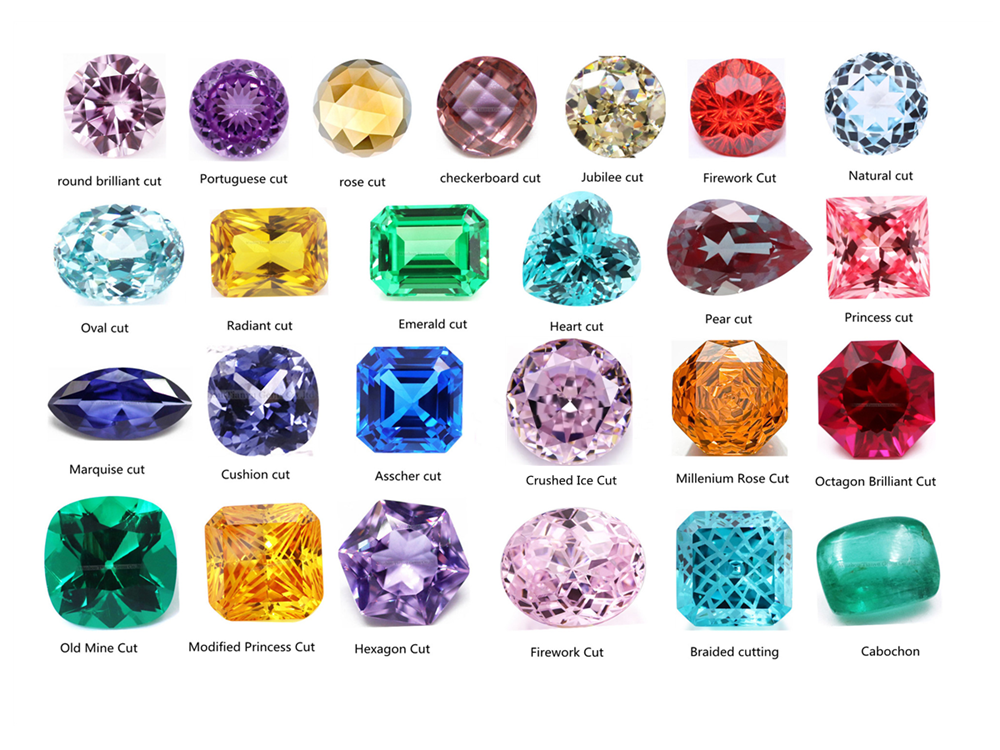
The round brilliant is the most popular and well-studied gemstone cut. With 57 or 58 facets arranged in a precise geometric pattern, it is engineered to maximize light return — producing the highest levels of brilliance, fire, and scintillation.
The round brilliant is the standard cut for diamonds and is also widely used for sapphires, rubies, and many semi-precious stones. Its popularity means it is the easiest cut to source in calibrated sizes and the most versatile for jewelry design.
The primary trade-off is carat weight loss. Cutting a round brilliant from rough stone typically results in 40 to 50 percent weight loss, which is reflected in the per-carat price. Despite this, the round brilliant’s superior optical performance and universal market acceptance make it the default choice for most commercial applications.
Oval Cut
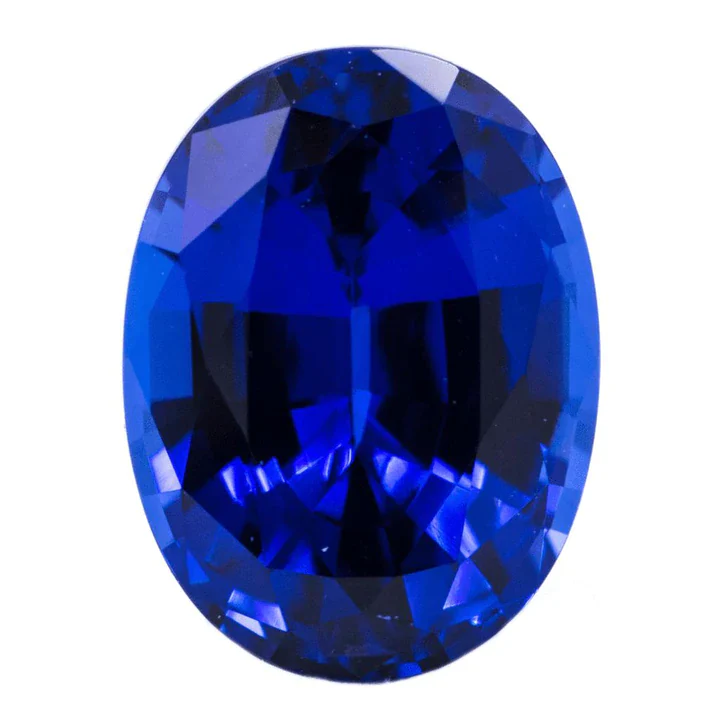
The oval cut offers a similar faceting pattern to the round brilliant but in an elongated form. This shape is particularly popular for colored gemstones because it can make stones appear larger than their carat weight would suggest due to its greater surface area.
Ovals are trending strongly in 2026, particularly for engagement rings and pendant designs. Their elongated silhouette creates an elegant, flattering look and pairs well with both classic and contemporary settings.
When sourcing oval gemstones, pay attention to the length-to-width ratio. Ratios between 1.3:1 and 1.5:1 are generally considered most attractive. Also watch for the “bow-tie effect” — a dark area across the center of the stone caused by light leakage — which is more pronounced in poorly proportioned ovals.
Cushion Cut
The cushion cut combines a square or rectangular shape with rounded corners, creating a pillow-like appearance. It features larger facets that produce bold flashes of light rather than the fine scintillation of a round brilliant.
Cushion cuts are exceptionally popular for colored gemstones, particularly sapphires and emeralds, because their larger facets showcase color saturation beautifully. In 2026, cushion-cut colored stones are a major trend for engagement rings and statement pieces.
Cushion cuts generally retain more rough weight than round brilliants, which makes them more cost-efficient per carat. They are available in a range of ratios from square (1:1) to elongated rectangular (up to 1.3:1), offering design flexibility.
Emerald Cut (Step Cut)
The emerald cut is a rectangular step-cut with cropped corners and long, open facets that create a “hall of mirrors” effect. Unlike brilliant-cut stones that emphasize sparkle, the emerald cut highlights clarity and color through broad, clean light reflections.
This cut demands high clarity in the rough material, as inclusions are more easily visible in its open facet structure. For this reason, emerald cuts command premium pricing when executed in high-clarity stones.
The emerald cut is having a strong moment in 2026, driven by trends toward clean, architectural jewelry designs and quiet luxury. It is used extensively for diamonds, emeralds, and sapphires.
Pear, Marquise, and Other Fancy Shapes
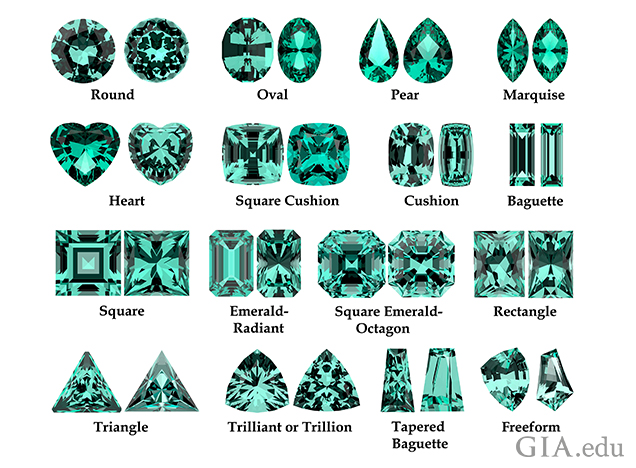
Pear-shaped (teardrop) cuts combine the brilliance of a round with the elongated form of a marquise. They are popular for pendant designs and can create striking engagement rings with a distinctive silhouette.
Marquise cuts feature pointed ends and an elongated body that maximizes perceived size. They require careful proportioning to avoid the bow-tie effect and look best in protective settings that shield the delicate points.
Other notable fancy shapes include the heart cut (a romantic choice with moderate demand), the trillion or trilliant (a triangular cut often used for accent stones), and the Asscher cut (a square step-cut that offers the clean lines of an emerald cut in a more compact form).
Cabochon Cut
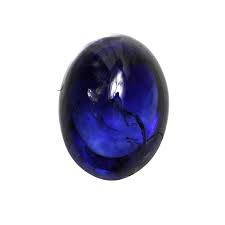
The cabochon is fundamentally different from faceted cuts — it features a smooth, domed surface without facets. This cut is used for opaque and translucent gemstones where faceting would not enhance beauty, as well as for stones that display optical phenomena best in a domed form.
Cabochons are the standard cut for turquoise, opal, jade, moonstone, star sapphires, star rubies, and cat’s-eye chrysoberyl. The smooth dome allows phenomena like asterism (star effect), chatoyancy (cat’s-eye effect), and adularescence (the glow in moonstone) to display optimally.
For jewelers, cabochon-cut stones are essential for bohemian, ethnic, and contemporary jewelry lines. They tend to be more affordable than faceted stones of the same material, offering attractive margin opportunities.
Choosing the Right Cut: Practical Considerations for Jewelers
When specifying cuts for your designs, consider four key factors.
Setting compatibility is crucial — different cuts require different setting types. Round brilliants and ovals are the most versatile, while marquise and pear shapes require protective prong settings at their points.
Stone material influences the ideal cut. Transparent stones with high refractive indices (diamonds, sapphires, garnets) perform well in brilliant-style cuts. Softer or included stones may be better served by cabochon or step cuts.
Client preferences and current trends matter. In 2026, ovals, cushions, and emerald cuts are in high demand, while rounds remain the perennial default.
Cost efficiency is a practical reality. Cuts that retain more rough weight (cushions, emerald cuts) generally offer lower per-carat pricing than rounds, which can be significant at higher carat weights.
Conclusion
Understanding gemstone cuts is not just gemological knowledge — it is a business skill that directly affects your design capabilities, sourcing decisions, and client satisfaction. The right cut transforms rough material into a gem that tells a story.
Source of Gems offers custom lapidary services for colored stones, including cutting from rough, resizing, polishing, and unusual specialty cuts. Contact us to discuss your cutting and calibration needs.